Why Shoulder Mobility That Looks Fine in the Mirror Still Causes Pain During an Overhead Press
Raising both arms overhead in front of a mirror, full range, no pinching, feels like solid proof the shoulder is ready for pressing work, and then the exact same range under an actual barbell or dumbbell produces a sharp pinch that the mirror check never showed, because an unloaded range check and a loaded press are testing two different things.

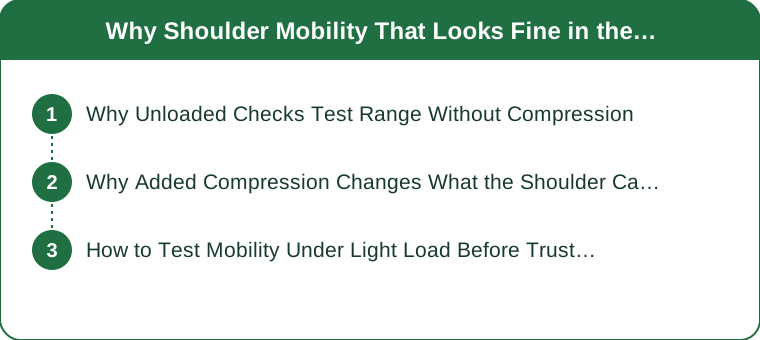
Why Unloaded Checks Test Range Without Compression
The gap: raising-the-arms-overhead-with-no-added-weight-tests-only-available-range-of-motion-and-does-not-load-the-joint-with-the-compressive-force-that-pressing-actually-applies (raising the arms overhead with no added weight at all testing only the shoulder’s available passive range of motion, and not loading the joint with any of the actual compressive force that a genuine overhead press applies, per the shoulder-mobility-exercises-guide logic — raising-the-arms-overhead-with-no-added-weight-at-all-testing-only-the-shoulders-available-passive-range-of-motion-and-not-loading-the-joint-with-any-of-the-actual-compressive-force-that-a-genuine-overhead-press-applies), and the reframe (a mirror check measuring range alone, not tolerance under load)).

Why Added Compression Changes What the Shoulder Can Tolerate
The change: loading-the-shoulder-with-a-press-compresses-the-joint-surfaces-together-in-a-way-that-can-pinch-soft-tissue-at-a-range-that-was-completely-pain-free-without-any-weight (loading the shoulder with an actual overhead press compressing the joint surfaces together in a way that can pinch soft tissue at exactly the same range that was completely pain-free moments earlier without any added weight at all, per the overhead-press-shoulder-guide logic — loading-the-shoulder-with-an-actual-overhead-press-compressing-the-joint-surfaces-together-in-a-way-that-can-pinch-soft-tissue-at-exactly-the-same-range-that-was-completely-pain-free-moments-earlier-without-any-added-weight-at-all), and the frame (the same joint angle behaving differently once compression is added to it)).
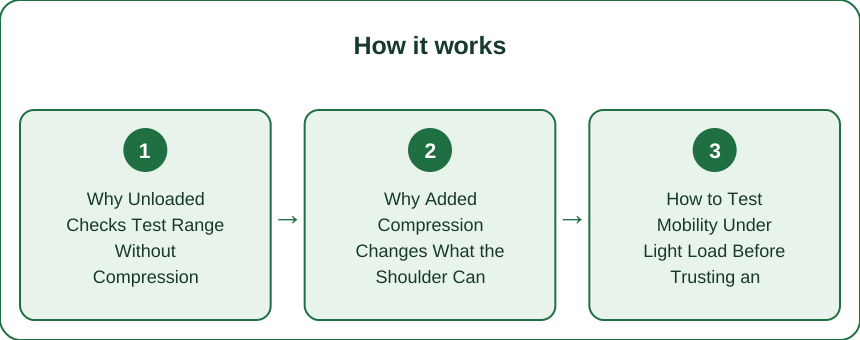
How to Test Mobility Under Light Load Before Trusting an Unloaded Check
The test: press-a-light-empty-bar-or-a-pair-of-light-dumbbells-through-the-full-overhead-range-before-loading-up-to-catch-a-compression-related-pinch-that-an-unloaded-check-would-miss (pressing a light empty bar or a pair of light dumbbells through the entire overhead range before loading up any further, specifically to catch a compression-related pinch that an unloaded mirror check would have completely missed, per the shoulder-mobility-lifting-guide logic — pressing-a-light-empty-bar-or-a-pair-of-light-dumbbells-through-the-entire-overhead-range-before-loading-up-any-further-specifically-to-catch-a-compression-related-pinch-that-an-unloaded-mirror-check-would-have-completely-missed), and the frame (testing under the condition that actually matters before adding real weight)).
Raising the arms overhead with no added weight tests only passive range of motion and doesn’t load the joint with the compressive force an actual press applies, which is why loading the shoulder can pinch soft tissue at exactly the same range that felt completely pain-free without any weight. Pressing a light empty bar or light dumbbells through the full overhead range before loading up further catches that compression-related pinch, testing under the condition that actually matters before real weight gets added.
Keep Reading
This article is for general informational purposes only and is not medical advice. Always consult a qualified health professional for guidance specific to you.