Why Shoulder Pain From Lifting Might Actually Be Coming From Your Desk
Shoulder pain that shows up during overhead presses or bench work often gets blamed entirely on lifting form, while the actual root cause built up over the eight hours at a desk beforehand — and no amount of form correction in the gym fully offsets that desk-built imbalance. This is general information, not medical advice.

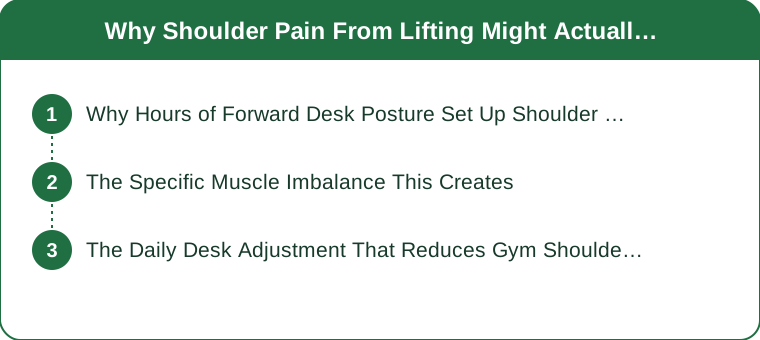
Why Hours of Forward Desk Posture Set Up Shoulder Mechanics That Lifting Then Aggravates
The posture-to-pain chain: the forward-head-and-rounded-shoulders-become-the-default-resting-position (the hours spent hunched toward a screen training the body to hold that position as its new normal baseline — the rounded-posture-becomes-default), the the-chest-muscles-shorten-and-upper-back-muscles-lengthen-and-weaken (the sustained forward position creating a specific tightness-and-weakness pattern across the front and back of the shoulder girdle — the specific-imbalance-pattern), the the-lifting-then-loads-a-shoulder-joint-that-is-already-out-of-its-neutral-position (the workout adding real load on top of a joint that spent all day held in a compromised position — the loading-an-already-compromised-joint), and the reframe (the lifting session being the trigger that surfaces pain, while the actual root cause accumulated hours earlier at the desk).

The Specific Muscle Imbalance This Creates
The mechanics involved: the tight-chest-and-front-shoulder-muscles-pull-the-shoulder-forward (the shortened front-side muscles physically rotating the shoulder joint out of its ideal alignment — the tight-front-pulls-shoulder-forward), the the-weak-upper-back-and-rear-shoulder-muscles-cant-counteract-that-pull (the lengthened, underused back-side muscles lacking the strength to hold the shoulder back in proper position — the weak-back-cant-counteract), the the-overhead-and-pressing-movements-specifically-expose-this-imbalance-the-most (the those particular lifts requiring the most shoulder stability being the ones most affected by the imbalance — the pressing-movements-most-exposed), and the frame (a tight, forward-pulled front and a weak, underused back creating exactly the instability that overhead and pressing movements are least forgiving of).
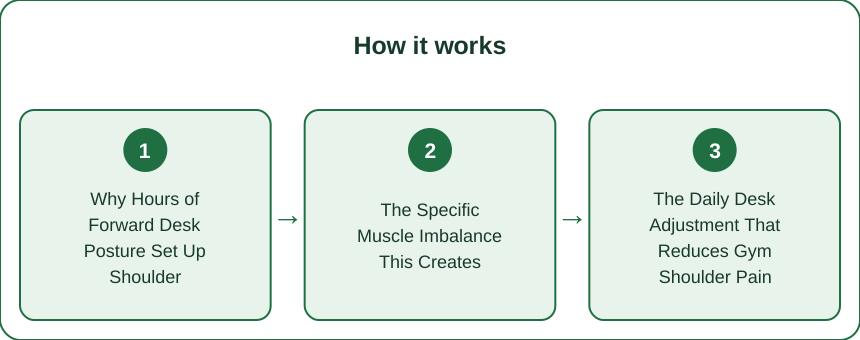
The Daily Desk Adjustment That Reduces Gym Shoulder Pain Without Changing the Workout Itself
The practical fix: the set-a-recurring-hourly-posture-reset-reminder (the interrupting the sustained forward position periodically throughout the workday rather than letting it hold for eight straight hours — the hourly-reset-reminder), the the-do-a-brief-chest-opening-stretch-at-each-reset (the actively counteracting the shortened front-of-shoulder muscles during each break rather than just sitting up straighter momentarily — the chest-opening-stretch-at-reset), the the-add-two-minutes-of-rear-shoulder-activation-before-lifting (the specifically waking up the underused upper-back muscles right before a pressing-heavy session — the pre-lift-rear-activation), and the frame (an hourly posture reset with a chest-opening stretch, plus two minutes of rear-shoulder activation before lifting, addressing the actual desk-built imbalance directly rather than only adjusting lifting form).
Shoulder pain during overhead presses or bench work often gets blamed entirely on lifting form, but the root cause frequently builds up during hours of forward desk posture beforehand, which trains rounded shoulders as the default resting position, shortens the chest and front-shoulder muscles, and lengthens and weakens the upper back muscles that should counteract that pull — an imbalance that overhead and pressing movements, which demand the most shoulder stability, expose the most. Reduce it with a recurring hourly posture-reset reminder paired with a brief chest-opening stretch to actively counteract the shortened front muscles, and two minutes of rear-shoulder activation specifically before a pressing-heavy lifting session, addressing the desk-built imbalance directly rather than only adjusting form in the gym. This is general information, not medical advice.
Keep Reading
This article is for general informational purposes only and is not medical advice. Always consult a qualified health professional for guidance specific to you.