How 'Text Neck' Quietly Turns Into Shoulder Pain (And How to Break the Cycle)
Quick Answer: Looking down at a phone for hours pulls your head forward, which forces your shoulder blades to round forward and your upper back muscles to overwork just to hold your head up. Fixing shoulder pain from ‘text neck’ requires addressing head position, not just stretching the shoulders alone.
You stretch your shoulders every night and the tightness is back by the next afternoon. If most of your day involves looking down at a phone, the shoulders aren’t really the source — they’re reacting to something happening at your neck.

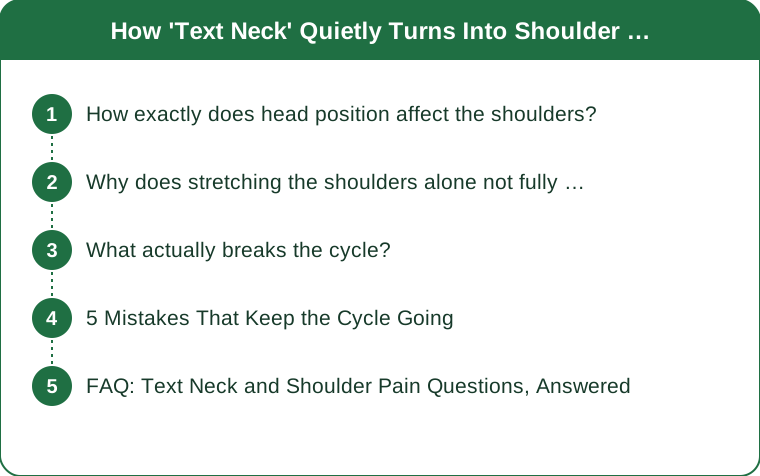
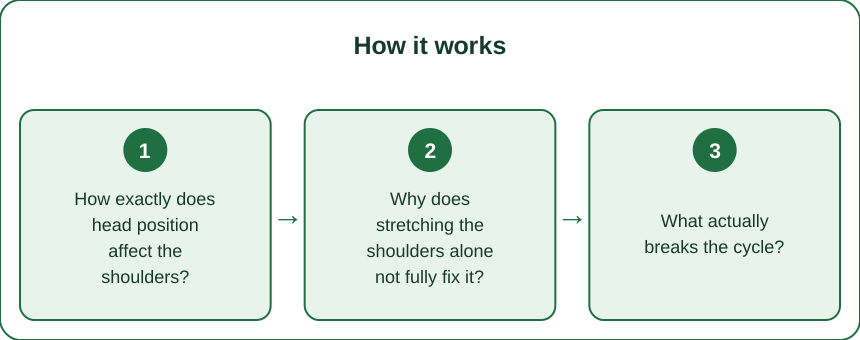
How exactly does head position affect the shoulders?
When your head shifts forward to look down at a screen, your shoulder blades are mechanically pulled into a rounded, forward position to keep your center of gravity balanced. Your upper trapezius and neck muscles then work overtime, hour after hour, just holding that head-forward posture up against gravity.
That sustained overwork is what shows up as tight, achy shoulders by the afternoon — the phone habit is the cause, the shoulder tension is the downstream symptom.
Why does stretching the shoulders alone not fully fix it?
Because the trigger — hours of forward head posture — is still happening the next time you pick up your phone. Stretching relieves the muscle tension temporarily, but without addressing the head position itself, the same overwork pattern restarts within minutes of your next scroll session.
It’s treating the downstream symptom without touching the upstream cause.

What actually breaks the cycle?
Bring the phone up to eye level instead of dropping your head down to it — even holding it a few inches higher measurably reduces the load on your neck and shoulder muscles.
Pair that with a chin tuck exercise: gently draw your chin straight back (like making a small double chin) and hold 5 seconds, repeated 10 times, a few times a day. It directly retrains the head position that’s driving the shoulder rounding, rather than just relieving the resulting tightness.
5 Mistakes That Keep the Cycle Going
1. Only stretching the shoulders, never addressing head position. Treats the symptom, not the cause.
2. Holding the phone low in your lap while scrolling. This is the single worst angle for neck and shoulder load.
3. Ignoring it during ‘passive’ scrolling time (in bed, on the couch) because it doesn’t feel like ‘real’ screen time.
4. Skipping shoulder blade strengthening, not just stretching — weak mid-back muscles make it harder to hold a corrected posture even when you try to.
5. Waiting for pain before doing anything about posture. By the time it hurts, the pattern is well established and takes longer to unwind.
FAQ: Text Neck and Shoulder Pain Questions, Answered
How long until posture changes actually reduce shoulder pain?
Many people notice some relief within 1-2 weeks of consistent chin tucks and phone-height changes, though full postural correction takes longer, more like 6-8 weeks of consistent habit.
Should I see a professional if the pain doesn’t improve?
Yes — if shoulder or neck pain persists more than a few weeks despite posture changes, or includes numbness or tingling down the arm, that’s a sign to see a physical therapist or doctor rather than keep self-treating.
Does a phone stand or holder actually help?
Yes, meaningfully, especially for long scrolling or reading sessions — anything that keeps the screen closer to eye level reduces the cumulative load compared to holding it low for hours.
TL;DR:
- Forward head posture from phone use mechanically pulls the shoulders into a rounded position
- Stretching shoulders alone doesn’t fix it if the head-forward habit continues
- Raise the phone to eye level and add daily chin tucks to retrain head position
- Persistent pain with numbness or tingling warrants a professional check, not more stretching
Today, try holding your phone at eye level for just your longest scrolling session — notice how differently your neck and shoulders feel by the end of it. This is general information, not medical advice.
Keep Reading
This article is for general informational purposes only and is not medical advice. Always consult a qualified health professional for guidance specific to you.