The Shoulder Lab: Happy Shoulders for Desks and Deadlifts
The shoulder is the body’s most mobile joint and pays for it in complaints: the desk-hunched ache, the paint-the-ceiling twinge, the gym press that pinches. The maintenance manual for the joint that does everything — and asks only for a little daily attention back.

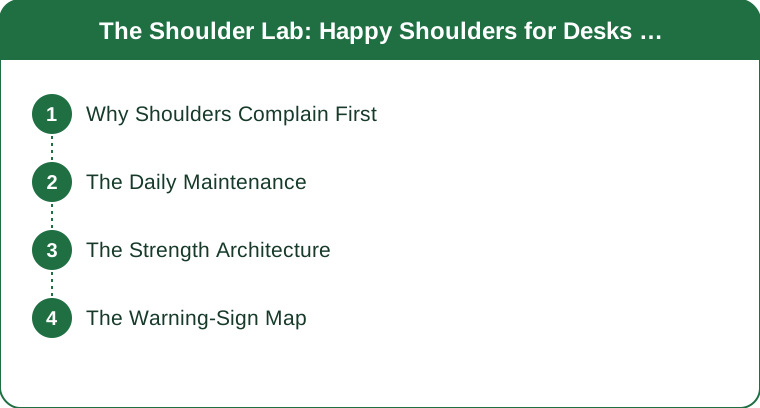
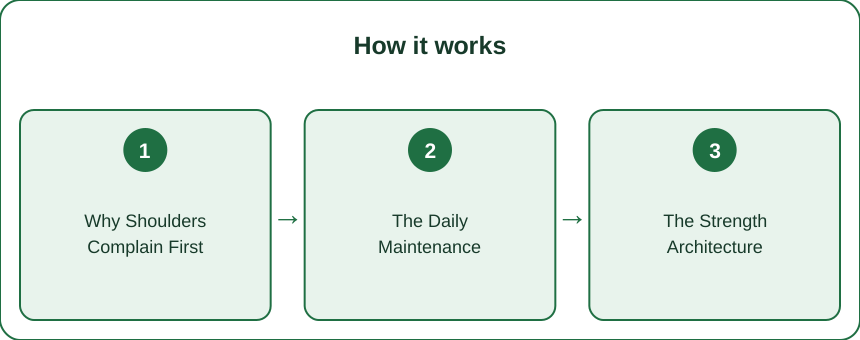
Why Shoulders Complain First
The design trade-off: the shoulder’s huge range comes from a shallow socket held by small stabilizers (the rotator cuff — four modest muscles doing precision work under every big movement), and modern life attacks the system from both ends: desk posture rolls the whole platform forward (tight chest, dormant upper back, the head-drifting-forward tax) while weekend demands ask for full overhead range the weekday posture surrendered. The complaint pattern — the pinchy overhead reach, the achy end of a desk day — is the mismatch talking.
The Daily Maintenance
The five-minute shoulder floor: band pull-aparts (the single best desk-antidote exercise — 15-20 reps, upper back awake, shoulders reset), wall slides or wall angels (the overhead-range rehearsal against honest feedback), the doorway chest stretch (30 seconds a side — the front of the shoulder is usually the tight half), and the hang (the dead-hang from the grip-lab doubles as shoulder decompression and lat length — accumulate what’s comfortable). Attached to an existing anchor — the kettle, the workday’s end — the routine survives; scheduled grandly, it doesn’t.

The Strength Architecture
Building press-proof shoulders: the pull-to-push ratio (desk-era shoulders want MORE pulling than pressing — the row family at twice the volume of the press family is the classic corrective prescription), the overhead progression (earn the barbell press through the landmine and dumbbell tiers — the slight-angle presses are friendlier to cranky shoulders while range rebuilds), the rotator-cuff direct work (band external rotations — boring, small, and the difference between a shoulder that tolerates training and one that files complaints), and the carry family (the farmer’s walk teaches the shoulder to sit stable under load — the grip-lab crossover pays here too).
The Warning-Sign Map
Reading shoulder signals: post-exercise muscle ache is normal adaptation (the DOMS rules apply), the pinch-at-one-spot pattern during overhead work deserves a form-and-volume audit before it deserves worry (usually the pull-push ratio and thoracic mobility conversation), night pain and progressive weakness are the see-a-professional tier (the rotator-cuff and frozen-shoulder worlds respond far better to early care — the months-of-ignoring path is the expensive one), and the reassurance clause: most desk-era shoulder grumbling reverses with exactly the boring routine above — the joint is forgiving when the maintenance finally arrives.
Pull twice as much as you push, hang daily, band work is the insurance. The shoulder does everything you ask — the lab just asks five minutes back.
Keep Reading
This article is for general informational purposes only and is not medical advice. Always consult a qualified health professional for guidance specific to you.